Thai · Breakfast · Free recipe
Thai Omelette (Kai Jiao)
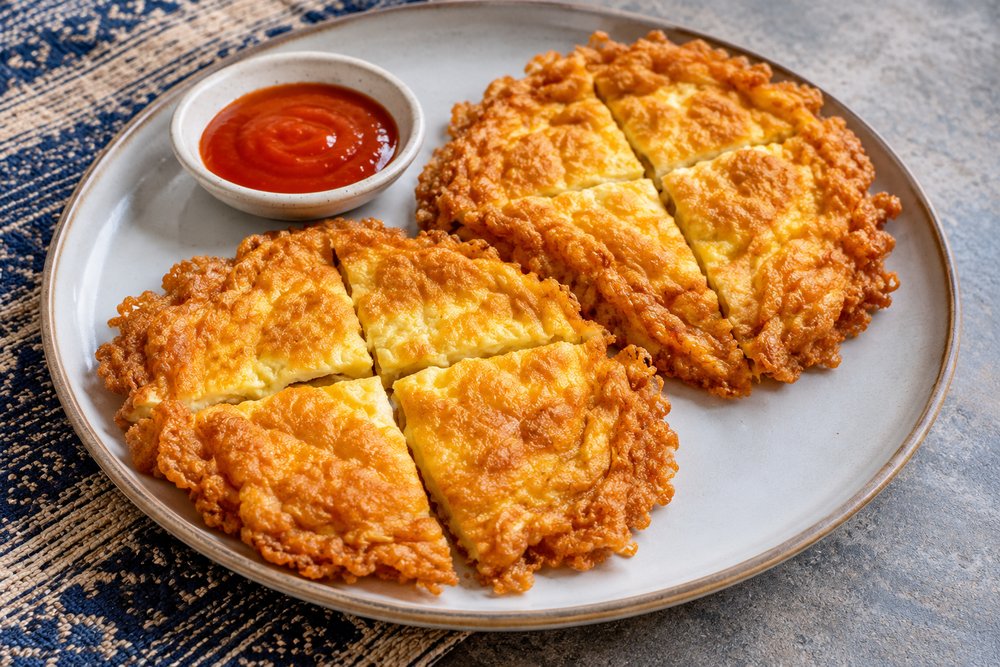
Well-beaten eggs fry into small golden omelettes with crisp edges.
- Active preparation
- 15 min
- Cooking
- 20-30 min
- Makes
- 2 omelettes; 4 side portions
- Additional time
- None
At the table
A home-kitchen version.
Kai jiao is a Thai-style omelette with a light, airy centre and golden, ragged edges. This home version uses a measured shallow layer of oil. The original amount makes two small omelettes to share as four side portions.
The short ingredient list leaves the technique doing most of the work: beat the eggs thoroughly, keep the oil hot without smoking, and cook the centre through. Rice or soup can accompany it, but they are not included in this recipe.
The recipe
Thai Omelette (Kai Jiao)
Makes 2 omelettes; 4 side portions
Timings are guidance for the original amount. Allow extra time for additional batches, resting or chilling; follow the method and doneness checks.
Ingredients
Equipment
20 cm skillet; spatula; thermometer
Allergen notes
Egg; fish
Method
Set up before heating oil. Put a clean plate, wide spatula and kitchen paper beside the stove. Use a twenty-centimetre skillet with sides, not a deep fryer. Break eggs into a bowl, checking for shell fragments, and wash hands afterwards.
Beat an airy mixture. Add all fish sauce to the eggs and whisk vigorously for about one minute until the whites and yolks are completely blended and a light foam forms. Divide the mixture equally into two bowls; each will make a small omelette.
Heat the first measured oil. Pour twenty-five millilitres oil into the skillet and warm over medium-high heat. It should shimmer without smoking. Keep the handle secure and lower the egg bowl close to the pan before pouring, avoiding a dramatic high splash into hot oil.
Cook the first omelette. Pour in one egg portion and let the edges puff and turn golden. Cook three to four minutes, lower heat if browning quickly, then flip carefully with the spatula. Cook two to three more minutes until the centre is firm and reaches 71 C.
Repeat cleanly. Lift the omelette onto kitchen paper with the cooked side supported. Add the remaining twenty-five millilitres oil and repeat with the second egg portion, again checking doneness. Thin, crisp edges are expected, but a liquid centre is not part of this version.
Serve four side portions. Cut each omelette in half and provide ten grams sriracha per portion. Rice and soup are separately prepared accompaniments rather than included ingredients. Refrigerate leftover cooked egg promptly, use within one day and reheat to 74 C; fried eggs are best eaten freshly made.
Use doneness checks rather than appearance alone. FoodSafety.gov temperature guidance.
Small details, better results
Before you cook
- Use the specified 20 cm skillet. A much larger pan spreads the egg too thinly and changes how it fries.
- Whisk until the whites and yolks are fully blended and lightly foamy. Lower the bowl close to the pan when pouring to reduce splashing.
Common questions
Is this a deep-fried Thai omelette?
No. This adaptation uses a measured shallow-fried method in a skillet rather than a large pot of deep oil.
Can I leave the centre runny?
Not in this recipe. Follow the method's firm-centre and 71 C doneness checks; the crisp edges are not a substitute for checking the middle.
Explore the full country collection
A Taste of Thailand
This is one of 30 recipes in our Thailand-inspired PDF cookbook. Preview the book before choosing your next kitchen adventure.
English PDF · Digital download, not a physical book. Etsy purchases do not unlock the DishRoam app.

Find this dish in